This post was updated January 2026
Autonomous Mobile Robots are transforming material handling and warehouse operations, but how much does an AMR cost in 2026?
Whether you’re exploring AMRs for picking, delivery, or full production integration, cost is often the first question. The answer? It depends on payload capacity, navigation technology, safety features, and how the system integrates with your facility.
At MESH Automation, we help clients across industries design automation strategies that make financial sense. Entry-level units are designed for straightforward material transport, while advanced systems incorporate custom features, fleet management, and compliance options that deliver higher productivity and faster ROI. For most organizations, the decision is less about the lowest price point and more about which tier delivers lasting operational value.
In this guide, we break down verified 2026 AMR pricing, explain the key cost drivers, and show you how to estimate your total system investment with clarity.
What Is the Average AMR Price in 2026?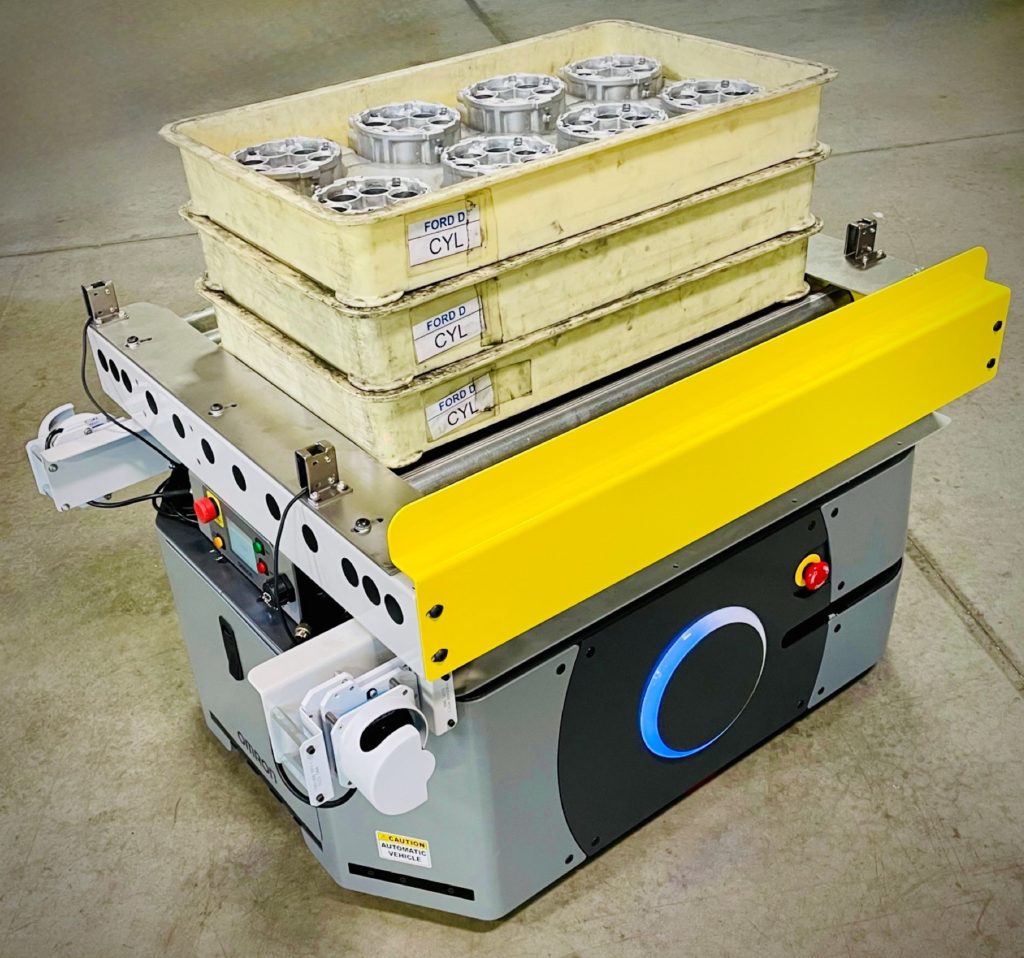
In 2026, the typical cost of an AMR ranges from $50,000 to over $200,000 per unit, with actual project totals running higher once you account for software, integration, and support systems.
Here’s how that breaks down:
| AMR Type | Typical Cost Range |
| Entry-Level Transport AMRs | $50,000 – $85,000 |
| Production-Ready & Heavy-Duty AMRs | $100,000 – $150,000 |
| Custom/Engineered AMR Systems | $200,000+ |
These numbers reflect hardware only, and actual investment can grow when software, mapping, integration, and training are included.
At MESH Automation, we focus on more than selling robots. Our engineers design full automation strategies that deliver ROI by solving operational challenges while staying on budget. This guide covers verified 2026 pricing, key cost drivers, and how to estimate your total system investment with confidence.
Why AMR Pricing Varies So Widely
At MESH Automation, AMR investments generally fall into three categories:
- Entry-level transport AMRs – $50,000–$85,000. Suitable for basic tote or pallet movement in structured workflows.
- Production-ready and heavy-duty AMRs – $100,000–$150,000. Built for larger payloads, higher precision, and multi-robot coordination.
- Custom-engineered systems – $200,000+. Incorporating robotic arms, conveyor toppers, or industry-specific configurations, these systems demand greater investment but often achieve the fastest payback periods in high-volume operations.
While unit cost provides a baseline, the true measure of AMR value lies in the system investment. Integration, software, and workflow alignment add to upfront cost but are the primary drivers of long-term ROI, often leading to payback in 18–24 months.
Why Is the AMR Cost Range So Large?
The cost of an autonomous mobile robot (AMR) in 2026 can swing from $50,000 to more than $250,000. That price gap is not just about robot size. It comes down to the mix of payload strength, docking precision, safety features, and the level of navigation intelligence built into the system. For companies considering a shift from manual labor or older AGVs, understanding these cost drivers is essential to making a confident investment decision.
Payload Capacity and Precision Requirements
One of the biggest factors in AMR pricing is how much weight the robot must carry and how accurately it needs to dock. A warehouse moving lightweight totes has very different needs than a manufacturer moving full pallets. Heavier loads demand stronger frames, larger motors, and more robust sensors, which raise the overall cost.
Payload Impact on Cost
- Light duty (60–300kg): $45,000–$65,000
- Medium duty (300–1,000kg): $65,000–$90,000
- Heavy duty (1,000–1,500kg): $90,000–$150,000+
Precision Docking
- Standard accuracy (±25mm): included in base pricing
- High precision (±8–15mm): +$10,000–$20,000
- Ultra-precise (±5mm): +$20,000–$30,000+
This is where many organizations start to recognize the real value of automation. Manual docking and alignment often lead to small errors that accumulate into lost time and higher operating costs. AMRs reduce that variability. The higher the docking accuracy, the smoother the workflow, though achieving that precision requires additional investment.
As payload and precision requirements grow, so does the need for advanced safety systems that ensure these powerful machines can operate reliably alongside human workers.
Collaborative Safety Features
Every autonomous mobile robot (AMR) must be designed with safety in mind. Basic systems cover the essentials, such as emergency stops and bumpers, but advanced collaborative features are what make AMRs practical in dynamic, human-shared environments.
Basic Safety:
- Emergency stop buttons and bumpers
- Basic proximity sensors
- Visual and audible alerts
Advanced Safety Features (+$15,000–$35,000):
- 360° LiDAR scanning for full environment awareness
- Multiple safety zones with variable operating speeds
- Human detection and tracking algorithms
- Predictive collision avoidance systems
While these features add to the upfront cost, they are critical for organizations operating in busy facilities where people and robots share the same space. Investing in advanced safety is less about compliance and more about protecting staff, minimizing downtime, and building confidence in automation.
Beyond physical safety measures, the true differentiator in modern AMRs lies in their navigation intelligence. The type of AI and mapping technology used determines not only how safely a robot operates but also how adaptable it is to changing environments.
AI Navigation and SLAM Technology
Navigation is one of the biggest cost factors in AMRs. The system that tells the robot where to go and how to move safely can range from simple markers to advanced real-time mapping.
QR code navigation ($50,000–$70,000)
- Uses scannable tags placed in fixed spots around the facility.
- Low cost and easy to set up, but limited flexibility if layouts change.
Visual SLAM (VSLAM) + LiDAR ($80,000–$150,000+)
- SLAM (Simultaneous Localization and Mapping) uses onboard cameras and 360° LiDAR to build a live map of the facility in real-time.
- Enables real-time obstacle avoidance and dynamic rerouting.
- Ideal for busy or changing environments where adaptability is key.
The navigation choice determines how much freedom your AMRs have. Basic systems work for predictable layouts, while advanced SLAM delivers long-term scalability and safer collaboration with people.
Taken together, payload capacity, docking precision, safety systems, navigation intelligence, and custom toppers explain why AMR costs vary so widely. Each factor influences how much work the robot can perform, how seamlessly it integrates with people, and how well it adapts to future needs. Once these cost drivers are clear, the next question is how they translate into real-world purchase decisions.
Autonomous Robot Cost by Type & Function (2026 Average AMR Cost Price Ranges)
Autonomous mobile robots come in several configurations, each designed for different collaborative tasks, from straightforward material transport to complex operations with robotic arms or custom fixtures. The total investment depends on which type of vehicle matches your operation, how it is equipped, and the efficiency gains it delivers.
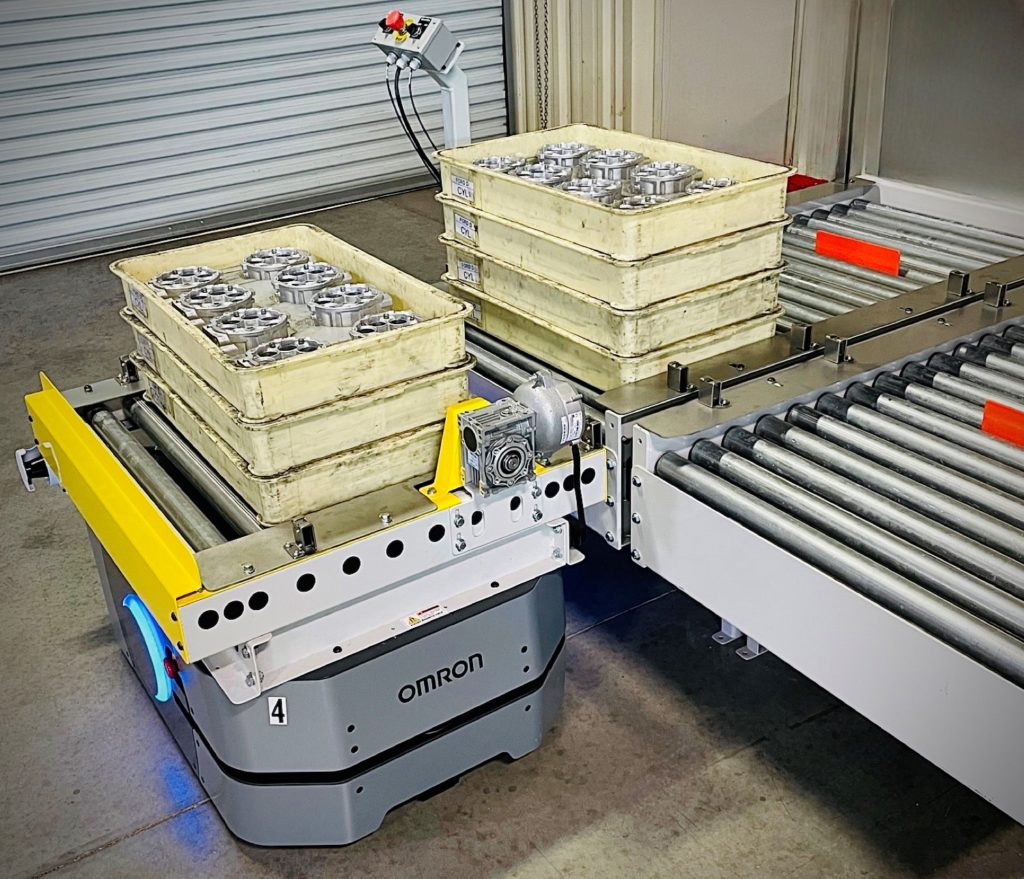
Collaborative Transport Units (Basic Material Handling)
The simplest way to see the value in AMR cost is in basic product movement. Even an entry-level robot, called a collaborative transport unit, can take over the repetitive job of carrying totes, bins, or light pallets across a facility.
In one deployment, a distribution center used a collaborative transport unit to move pallets of bagged mulch from receiving docks to storage aisles. The robot handled 60–300kg loads on each trip, navigating safely through shared spaces without the need for fixed guide paths.
- Investment range: $45,000–$85,000 depending on payload and sensors
- Primary role: replace manual cart pushing and pallet jack runs
- Operational impact: reduced labor fatigue, improved delivery accuracy, and freed workers for quality checks
- Payback period: typically under 18–24 months through labor savings alone, with faster ROI in 24/7 operations
For many organizations, these transport units are the first step into automation because they solve a simple, universal problem: moving materials reliably from point A to point B.
Heavy-Duty Industrial Units (High Payload & Precision)
When loads get heavier, AMR cost rises because the machines must be stronger, more precise, and equipped with advanced navigation. These are the heavy-duty industrial units, designed to handle pallets and materials that would normally require forklifts.
In one deployment, a manufacturing plant introduced a heavy-duty AMR to transport stacked steel sheets between cutting stations and assembly areas. The robot managed 1,000–1,500kg payloads with docking precision within 8–15mm, ensuring safe and repeatable placement at each workstation.
- Investment range: $85,000–$150,000 depending on payload and precision requirements
- Primary role: replace forklifts for heavy pallet movement
- Operational impact: improved worker safety, reduced forklift traffic, and faster material delivery
- Payback period: often under 24 months, accelerated by reduced equipment maintenance and fewer handling accidents
Heavy-duty AMRs are best suited for industries where precision and strength directly affect ROI, such as metals manufacturing, automotive production, or large-scale distribution.
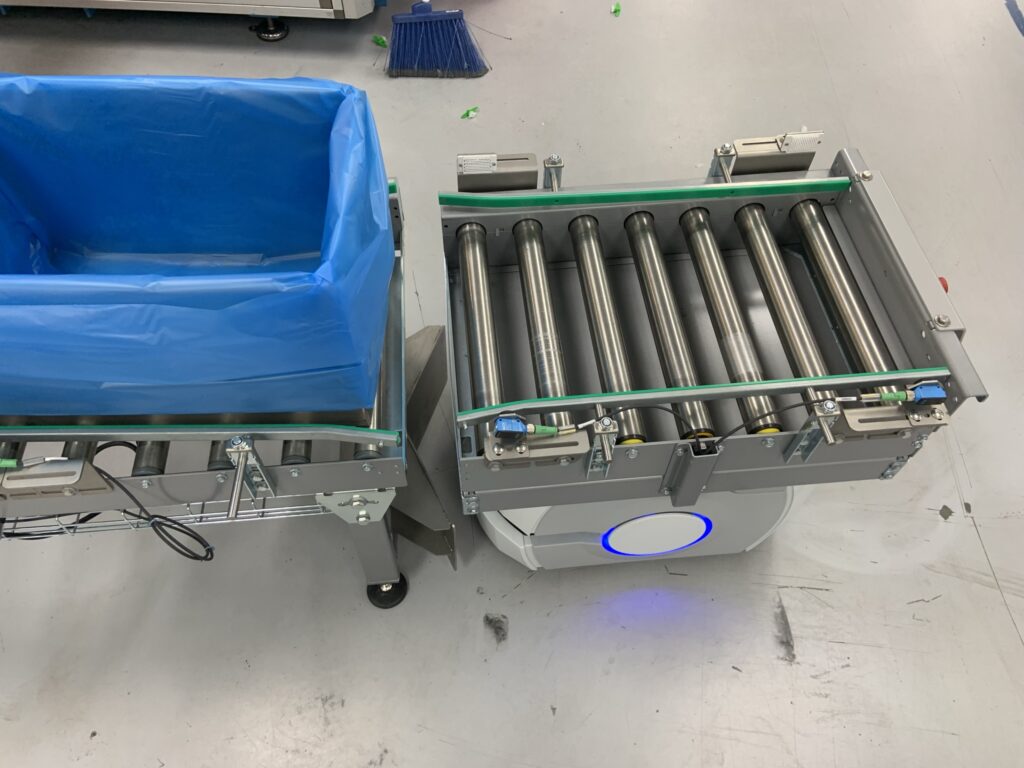
Specialized Units with Custom Toppers
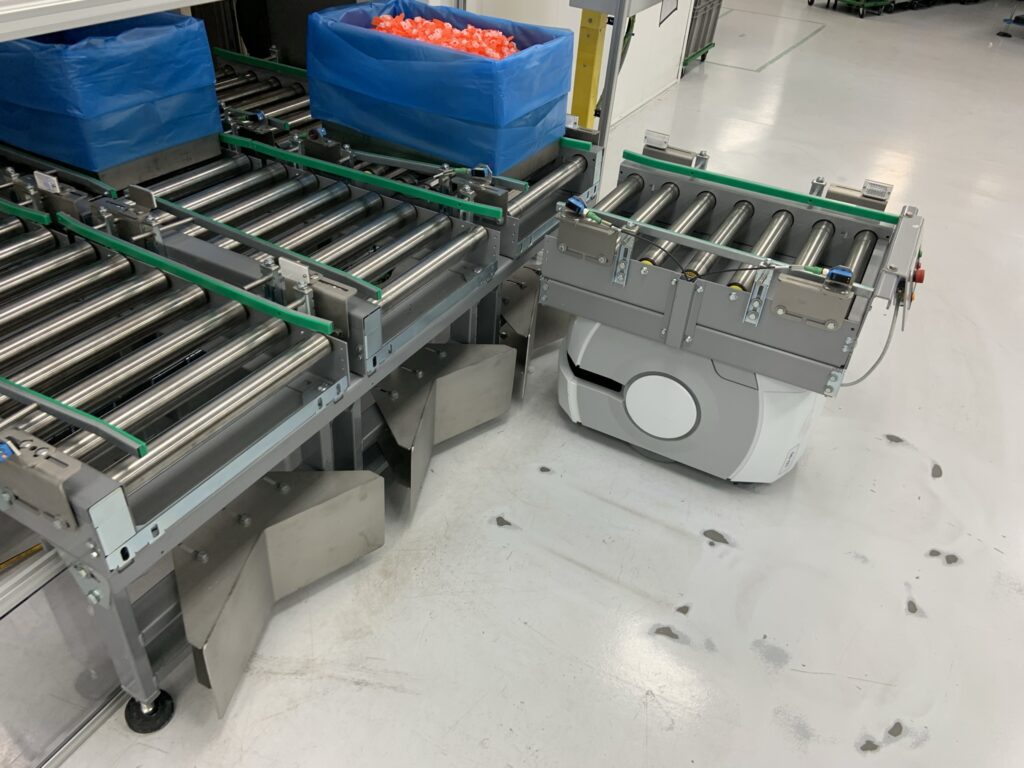
The most advanced systems are specialized AMRs with custom toppers, built for tasks beyond simple transport. These units combine a mobile base with equipment like conveyors, lift tables, or robotic arms to handle complex workflows.
In one deployment, an electronics manufacturer used a custom-topped AMR to move and place GPU boxes directly onto testing stations. The robot’s robotic arm attachment allowed it to load and unload equipment without human assistance, streamlining throughput during peak production runs.
- Investment range: $100,000–$200,000, with fully engineered solutions exceeding $250,000
- Primary role: automate multi-step handling tasks that require more than transport
- Operational impact: reduced manual handling, improved consistency, and shortened cycle times
- Payback period: varies by application, but many facilities report ROI in under 24 months when factoring in reduced labor costs and higher throughput
Together, these examples show how AMR cost scales with capability. From simple transport units to fully customized systems, the price reflects the amount of work the robot can take off your team’s shoulders and the speed at which it delivers a return.
But the robot itself is only part of the equation. To make automation successful, the system has to be mapped to your facility, connected with your workflows, and supported in a way that fits your operation. That’s where the right integration partner makes the difference.
Integration and Support with MESH Automation
MESH Automation helps clients move past the hardware price tag and into real solutions. Our integration services ensure every AMR is not just delivered but fully adapted to your facility – mapped, configured, and optimized to work alongside your team from day one.
That’s why the next step isn’t just about comparing price tags; it’s about choosing a partner who can guide you through deployment, integration, and long-term success.
How MESH Automation Simplifies AMR Integration
Buying the robot is only the beginning. For most organizations, the real challenge is getting that technology to fit smoothly into existing workflows without overwhelming staff or creating hidden costs. MESH Automation takes that burden off your team by handling the critical steps that make automation successful:
- Facility Mapping
- Robots learn your floorplan using onboard sensors.
- MESH engineers define pickup and drop zones, traffic flow, and charging areas to maximize uptime.
- System Integration
- Seamless connections with WMS, ERP, or production systems.
- Barcode, RFID, and conveyor handshakes built in where needed.
- Workflow Programming
- Tasks are tailored to your operation, from route logic to exception handling.
- Multi-robot coordination for larger fleets.
- Training and Support
- On-site training ensures your team is confident from day one.
- Ongoing support keeps systems updated and reliable without relying on outside technicians for small changes.
By focusing on solutions instead of line-item add-ons, MESH makes integration straightforward and cost-effective, so your AMR investment delivers value faster.
 Choosing the Right AMR for Your Facility
Every facility is different, and so is every AMR system. From layout and load type to throughput goals and safety requirements, the right solution must be designed with your operation, not just your industry, in mind.
Matching AMR Type to Use Case
Here’s a general guide:
- Collaborative Transport AMRs are ideal for repetitive, point-to-point material moves in structured environments.
- Heavy-Duty Industrial AMRs are best for operations with heavy pallets, variable drop-off points, or where forklift replacement is the goal.
- Specialized Custom AMRs are the right choice when off-the-shelf platforms can’t safely or efficiently handle your payloads, tooling, or clearance zones.
If your facility is expanding, changing product mix, or experiencing labor shortages, AMRs can help streamline operations without a full infrastructure overhaul.
Budgeting with Confidence
AMRs are a strategic investment. Choosing the right vehicle, software, and support structure upfront is the difference between years of ROI or a project that stalls during rollout.
MESH Automation guides clients through:
- Technology selection
- Facility mapping and throughput modeling
- Safety and compliance planning
- Custom software integration
Whether you need a single AMR or a facility-wide fleet, our team will help you scope, quote, and implement a solution that aligns with your long-term automation roadmap.
Talk to MESH Automation About AMR Pricing and Planning
Want a more accurate estimate for your facility? MESH Automation offers expert consultation, facility assessments, and end-to-end AMR integration. We’ll help you clarify your needs, define your specs, and design a solution that works within your budget and delivers measurable ROI.
Contact us today to discuss your AMR project and see how automation can transform your material handling operation.