High-Speed Robotic Parcel Induction Systems for Automated Sortation and Fulfillment


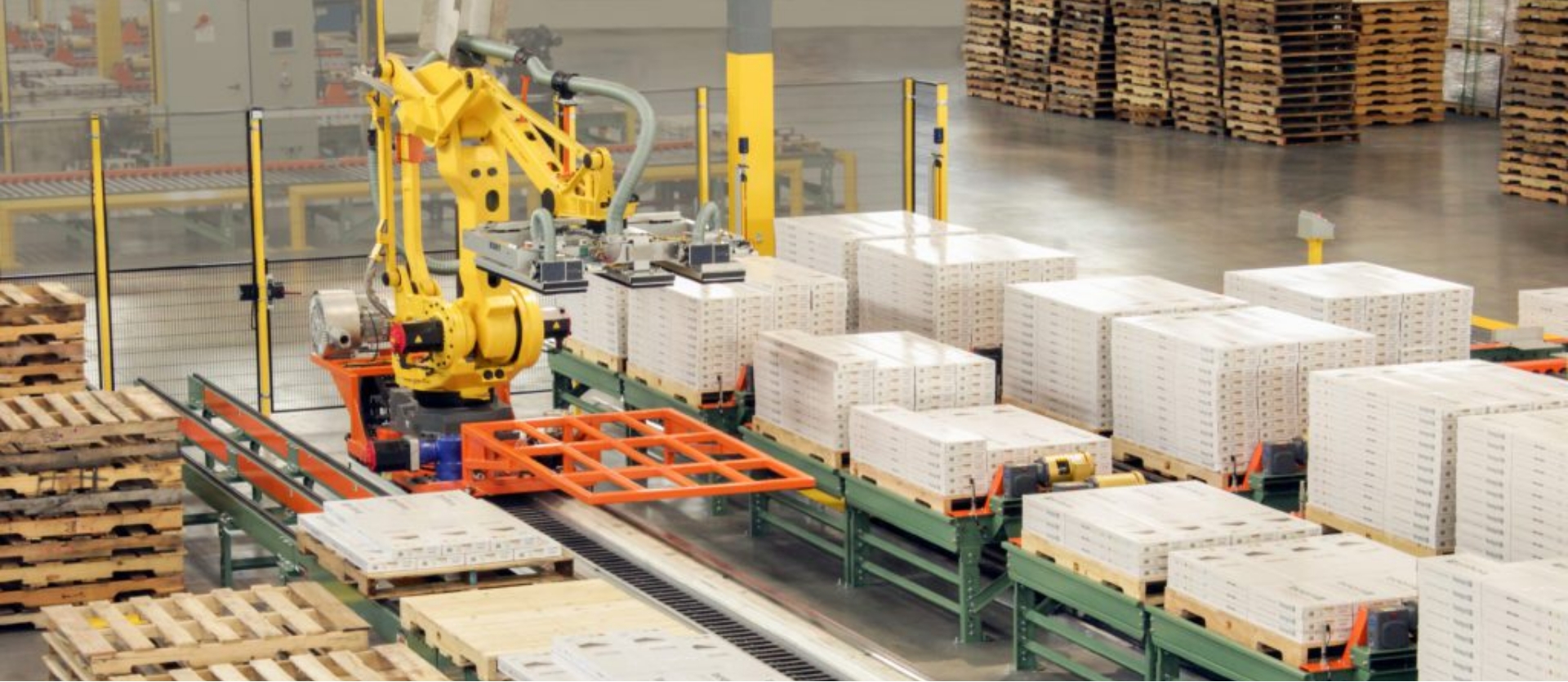
Robotic induction is transforming how warehouses and distribution centers handle bulk parcel processing. The MESH XInduct is a high-speed robotic induction system designed to automate bulk package loading with precision, speed, and reliability.
Built for modern logistics environments, XInduct eliminates manual induction bottlenecks and delivers consistent, scalable performance across high-volume operations.
What Is Robotic Induction?
Robotic induction is the automated process of identifying, picking, scanning, and placing parcels onto a sorter or conveyor system.
Instead of relying on manual labor to orient and load packages, robotic induction systems use vision technology and robotics to perform these tasks continuously and at high speed.
The result is improved throughput, reduced labor dependency, and more consistent system performance.
MESH XInduct Robotic Induction System
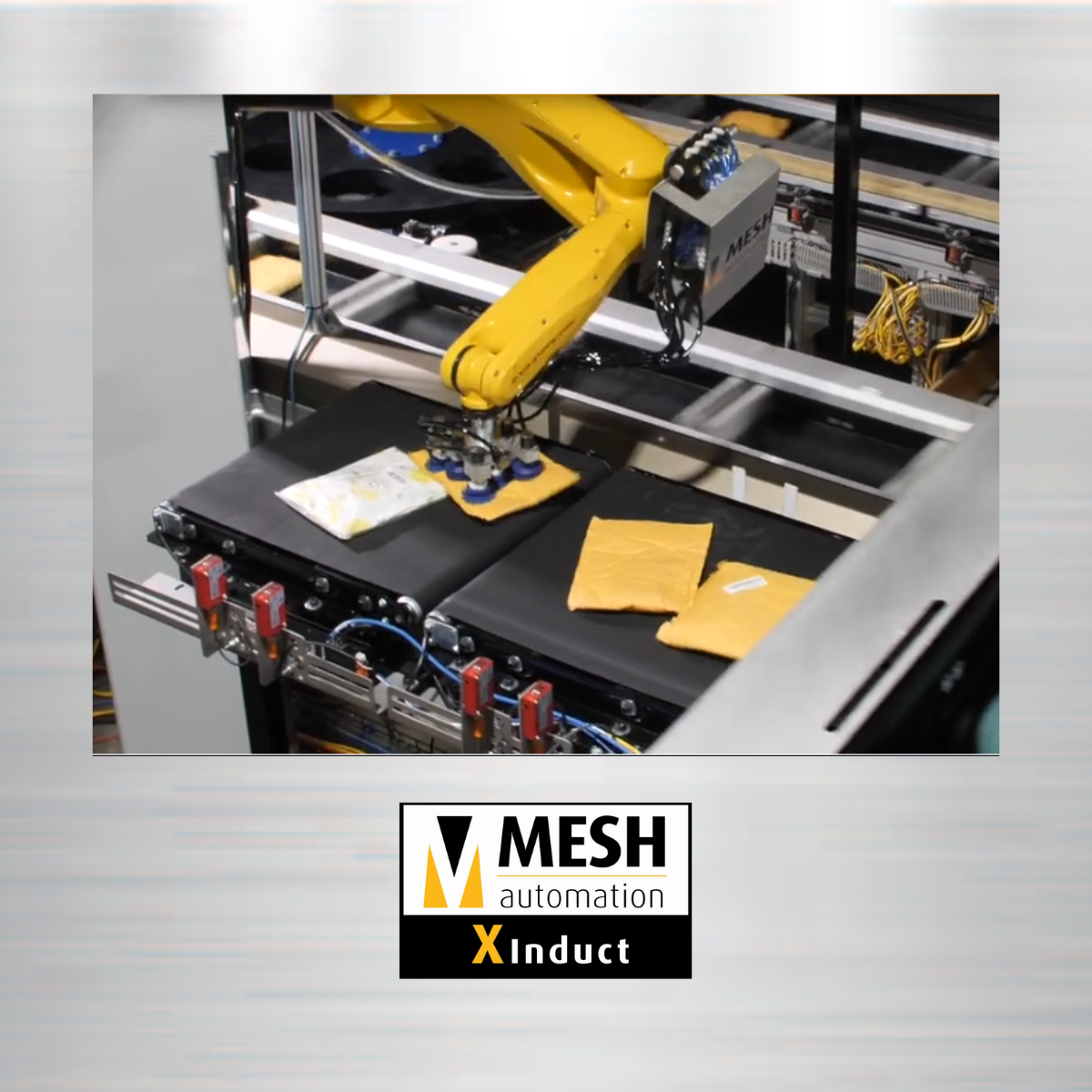
The MESH XInduct is a turnkey robotic induction solution engineered to automate bulk parcel handling and loading.
The system is capable of processing up to 1,800 picks per hour per robot, making it ideal for high-speed sorting environments.
Using adaptive 3D vision technology, XInduct can accurately identify and pick:
- Irregular parcels
- Overlapping packages
- Stacked items
This allows the system to break down bulk product flow into organized, induction-ready streams without manual intervention.
Barcode scanning is performed on both the top and bottom of each parcel, achieving 99%+ read rates. Any unread items are automatically diverted to a designated hospital area for quick resolution by personnel.
Built for High-Speed Sorting Systems
The XInduct robotic induction system is designed for continuous, high-throughput sorting applications.
It integrates with:
- Split tray sorters
- Tilt tray systems
- Cross-belt sorters
- Continuous belt systems
Because it is sorter-agnostic, XInduct can be deployed across a wide range of existing and new automation environments.
Key Benefits of Robotic Induction with XInduct
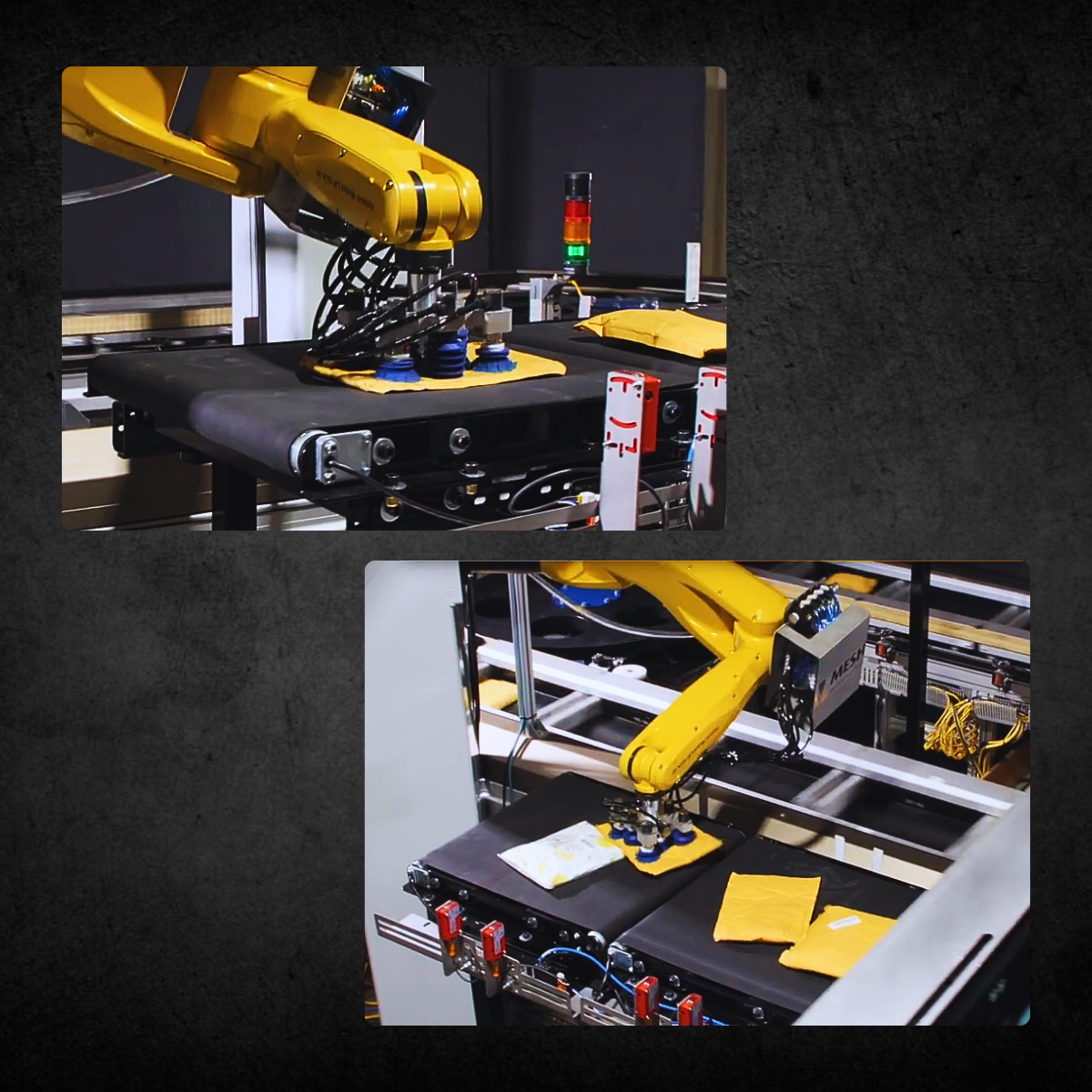
- Processes up to 1,800 picks per hour per robot
- Eliminates manual bulk package loading
- Handles mixed, irregular parcel streams without pre-sorting
- Achieves 99%+ barcode read accuracy
- Automatically diverts unread items for resolution
- Retrofit-friendly for existing facilities
- Modular and scalable for future growth
Robotic induction with XInduct improves throughput while reducing variability, making it a strong fit for operations under increasing volume pressure.
Who Benefits from Robotic Induction?
Robotic induction systems like XInduct are ideal for operations that manage high parcel volume and require consistent flow into sorting systems.
Common use cases include:
- Distribution centers
- Warehouse operations
- Third-party logistics providers
- Manufacturers with internal shipping operations
- Facilities with high-volume sorting requirements
Designed for Scalability and Retrofit
The MESH XInduct system is designed to scale with operational demand. Its modular architecture allows for expansion through additional robots and system enhancements as throughput requirements increase.
It is also retrofit-friendly, enabling integration into existing warehouse layouts without requiring a full system replacement.
Backed by decades of automation expertise, XInduct provides a future-ready robotic induction solution built for evolving logistics environments.
Talk to MESH About Robotic Induction
If your operation is limited by manual induction or struggling to keep up with sorting demand, robotic induction may be the next step.
Talk to MESH Automation to learn how the XInduct system can automate parcel induction, increase throughput, and support long-term growth.
Robotic Induction FAQ
What is robotic induction in warehouse automation?
Robotic induction is the automated process of picking, scanning, and placing parcels onto a sorter or conveyor using robotics and vision systems instead of manual labor.
How fast is a robotic induction system?
High-speed systems like MESH XInduct can process up to 1,800 picks per hour per robot, depending on parcel characteristics and system configuration.
Can robotic induction handle irregular packages?
Yes, advanced systems use adaptive 3D vision to identify and pick irregular, overlapping, and stacked parcels without requiring pre-sorting.
What happens to unread barcodes?
Unread parcels are automatically diverted to a designated exception or hospital area where they can be quickly resolved by personnel.
Does robotic induction work with existing sorters?
Yes, robotic induction systems like XInduct are designed to integrate with multiple sorter types, including cross-belt, tilt tray, split tray, and belt systems.
Is robotic induction scalable?
Robotic induction systems are modular and can scale by adding additional robots or system components as throughput demands increase.
Who should consider robotic induction?
Operations with high parcel volume, manual induction bottlenecks, or growing throughput demands should consider robotic induction to improve efficiency and consistency.