Transportation and logistics now represents the single largest application category for professional service robots globally, and the pressure on fulfillment operations only grows.
Automated warehouse systems have crossed from early-adopter technology into standard operational infrastructure. For warehouse leaders, the question is no longer whether to automate but which systems remove the specific constraints that limit throughput and fulfillment reliability.
This guide breaks down how automated warehouse systems work, where they improve throughput, and how to choose the right configuration for your operation.
What Are Automated Warehouse Systems?
An automated warehouse system links robotics, software, and real-time data into one operation. Inventory moves through the facility with minimal manual handling. Receiving, storage, picking, sorting, packing, and shipping all run inside a single coordinated setup instead of as separate, disconnected steps. The software layer is what actually makes it work, telling every machine what to do and when to do it.
Core Components
Software and controls come first in this hierarchy. Hardware only does what the software tells it to do.
At the top sits the Warehouse Management System (WMS), the system of record for inventory, order processing logic, and storage allocation. Below that, the Warehouse Control System (WCS) acts as the real-time traffic cop, turning WMS orders into specific commands for individual machines. Programmable Logic Controllers (PLCs) handle the last step, executing those commands directly at the equipment.
On the physical side, each piece of hardware has one job. Automated Storage and Retrieval Systems (AS/RS) handle dense storage and fast retrieval, while autonomous mobile robots and automated guided vehicles move product between zones. Automated conveyor systems carry goods along fixed paths, and robotic buffering systems hold inventory between processes that run at different speeds.
None of it works in isolation.
The shared controls layer is what turns five separate machines into one warehouse.
Types of Warehouse Automation Systems
| System Type | Primary Function | Best Fit |
|---|---|---|
| AS/RS | Dense automated storage and retrieval | High-SKU facilities with space constraints |
| AMRs | Flexible transport without fixed infrastructure | Dynamic, high-SKU operations |
| AGVs | Fixed-path point-to-point movement | Stable, predictable high-volume routes |
| Conveyor and Sortation | Continuous product flow and routing | Facilities needing steady throughput between zones |
| Robotic Buffering | Inventory sequencing between processes | Operations with staging congestion or timing gaps |
| Goods-to-Person (GTP) | Bring storage units to stationary pickers | Operations where picker travel is the primary bottleneck |
| Robotic Arms / Cobots | Picking, packing, palletizing, case handling | Repetitive fixed-station tasks with high volume |
How Automation Improves Throughput
Automation improves throughput by removing the physical and informational delays that throttle manual operations. Manual warehouses are limited by human travel time, shift constraints, physical fatigue, and process variation. Automated systems eliminate those variables by replacing them with mathematically calculated machine logic operating continuously across shifts.
Workflow Optimization
The biggest throughput gains come from balancing the full flow. A WCS monitors equipment utilization in real time and adjusts routing before congestion forms.
If packing is running slower than picking, the system can hold product in a robotic buffer rather than flooding the packing station. This kind of dynamic workflow balancing keeps the entire facility operating at a synchronized pace.
Dynamic batching in automated stock-to-picker systems raises pick-station throughput by 37 to 43 percent for multi-line orders compared to static batching. That gain comes from smarter grouping logic.
The machines stay the same; the batching rules change.
Reducing Downtime
Manual operations are vulnerable to shift changes, absenteeism, labor shortages, and fatigue-driven errors. Automated systems run continuously. AI-driven robotics support 24/7 operation across demand peaks without the performance degradation that comes with second and third shifts running on reduced crews.
Predictive maintenance is another downtime lever. A WCS platform tracks sensor data, motor performance, and fault codes around the clock.
This catches a failing part well before it actually fails. A motor that gets flagged at 2 AM costs a maintenance ticket. The same motor failing during a Tuesday peak shipping run costs hours of lost output instead of one repair visit.
Increasing Processing Speed
Faster processing starts with removing wait states and travel time. Machine speed matters less here than people assume. Structural delays do more damage to throughput than slow hardware ever does.
Goods-to-person systems bring inventory to a stationary operator instead of sending the operator to the inventory, cutting out the walking time that eats up a large share of every manual pick cycle. Conveyor and sortation systems keep cases and totes moving continuously between zones at controlled speeds instead of the old stop-and-start batch handoffs. Robotic arms with computer vision handle picking, packing, and palletizing at a pace and accuracy manual labor can’t hold for a full eight-hour shift.
Reducing Warehouse Bottlenecks
Bottlenecks form at process transition points where throughput from one stage overwhelms the capacity of the next. The three most common in distribution operations are picking, sorting, and order consolidation.
Picking Bottlenecks
Picking bottlenecks are usually travel-time problems disguised as labor problems. When workers spend more time walking aisles than actively picking, throughput plateaus regardless of how many people are on the floor.
Goods-to-person systems invert this by routing product to fixed workstations. AMRs address it by reducing the distance workers carry goods between pick locations and downstream processing.
Research shows optimized digital warehousing reduces picking time by approximately 10 percent. That figure understates the impact in high-SKU operations where travel paths are long and order complexity is high.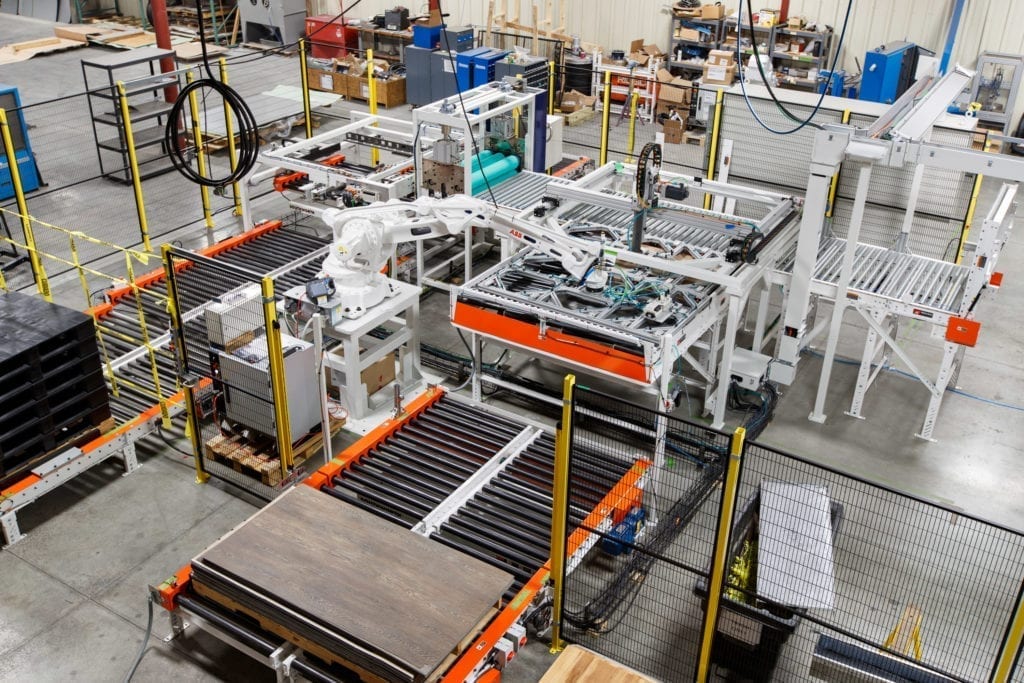
Sorting Bottlenecks
Manual sorting at high volumes introduces both speed limits and error rates. Automated sortation systems, including sliding shoe sorters, cross-belt sorters, and tilt-tray systems, divert product to specific lanes based on real-time routing logic from the WCS. Zero-pressure accumulation zones allow product to build up safely without contact damage or physical jams during volume surges.
WCS-driven sortation also routes product correctly the first time. That accuracy is what actually eliminates the rework cycle that often hides behind sorting bottleneck statistics.
Order Consolidation Delays
Multi-zone, multi-SKU orders create a specific problem: items from different areas of the facility arrive at different times. If packing can’t start until every item is present, the slowest zone sets the pace for the entire order. Robotic buffering solves this by holding items from faster zones in a controlled, sequenced buffer until the full order is ready. The packing station receives complete orders rather than fragments, and cycle times drop.
Storage Optimization Strategies
Storage strategy directly affects retrieval speed, travel distance, and throughput capacity. The right storage approach keeps high-velocity inventory close to the point of use and maximizes cube utilization across the facility footprint.
High-Density Storage
AS/RS configurations operate in narrow aisles and use the full vertical height of a facility, pushing storage capacity well beyond what traditional racking and manual forklifts can reach. Research on storage reallocation and I/O station redesign in AS/RS environments shows throughput increases of 21 to 28 percent. Space utilization improvements in optimized digital warehousing environments run around 14.8 percent. Neither figure requires new square footage.
High-bay automated warehouses are particularly effective in markets where facility space is constrained.
Vertical density is the path to more capacity when horizontal expansion isn’t an option.
Inventory Sequencing
Where product is stored determines how fast it can be retrieved. High-velocity SKUs stored closest to I/O stations reduce retrieval cycle times. WMS-driven slotting logic assigns storage locations based on velocity, weight, dimensional data, and order co-occurrence patterns. In AS/RS systems, reallocating storage locations to reduce average travel distance is one of the highest-return optimization moves available without adding hardware.
Dynamic Buffering
Dynamic buffering is the mechanism that keeps upstream and downstream processes synchronized when they operate at different speeds. When picking outpaces packing, or when AS/RS releases product faster than downstream workstations can absorb it, a robotic buffer holds inventory in a controlled queue and releases it based on downstream readiness signals from the WCS. This prevents mechanical starvation at packing while keeping upstream equipment running at productive rates. See MESH’s robotic buffering systems for the architecture behind this approach.
Automation for Order Fulfillment
Order fulfillment is where throughput gains translate into shipping performance. The three processes with the most measurable impact are picking speed, order consolidation, and shipment coordination.
Faster Picking
Automated picking systems go after the two biggest time sinks in manual picking: travel and search. Goods-to-person systems bring the storage unit to a stationary operator, so workers stay in productive motion instead of walking aisles all shift.
Robotic arms with machine vision handle piece-pick work at a speed that scales with order volume, not with how many people you can put on the floor. Dynamic batching software groups orders to minimize total picks per wave.
Fewer pick events for the same shipment volume.
Automated Consolidation
Consolidation is the step where multi-zone orders come together before shipping. Without automation, this involves manual staging, physical searching, and the errors that come from both. Automated sortation hardware routes items to consolidation lanes based on order identity.
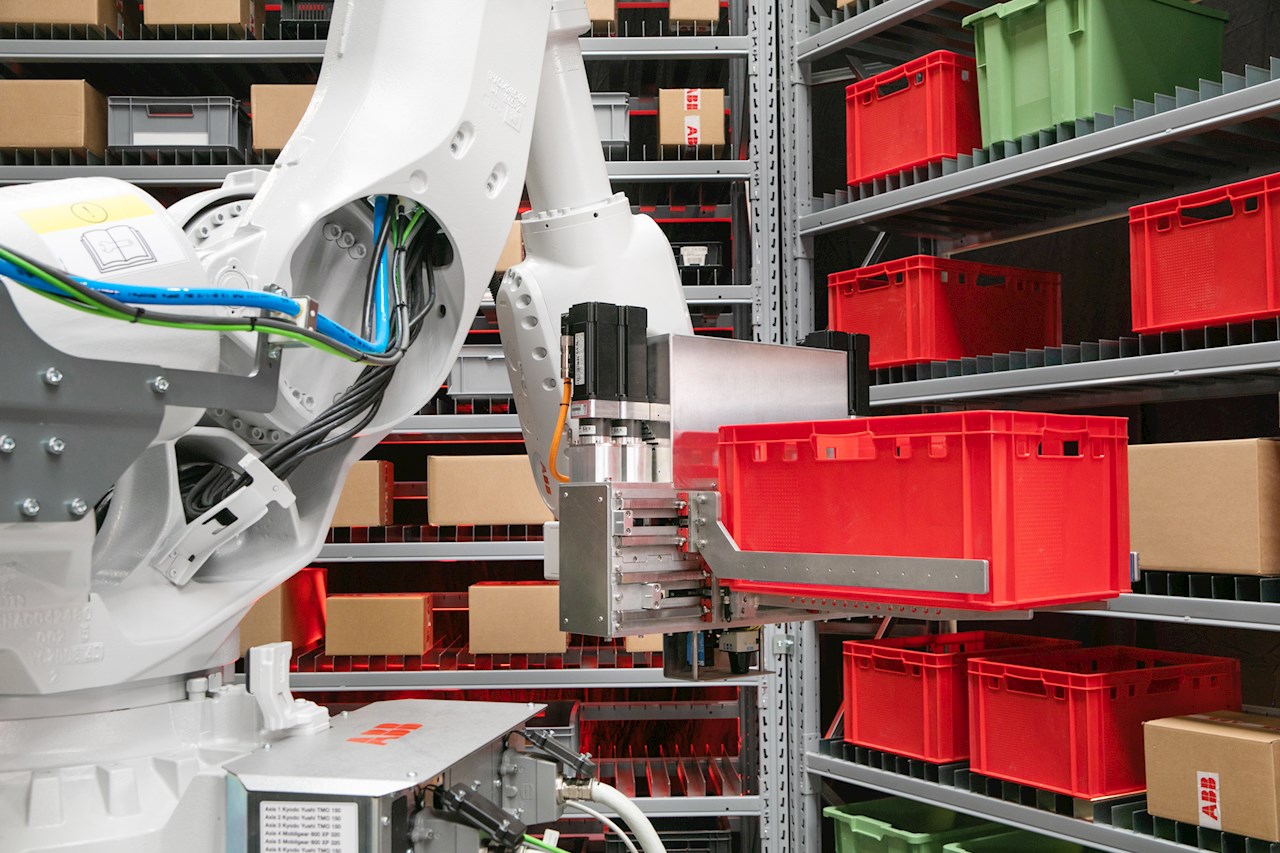 Robotic buffers hold items from completed zones until the remaining items arrive. Automated packing systems with conveyors, sensors, and automated sealing reduce idle time at the end of the consolidation sequence. The result is orders that complete in full rather than waiting on the slowest manual process in the chain.
Shipment Coordination
Shipment readiness depends on timing as much as speed. An order packed early but sitting on the dock because the pallet build isn’t complete doesn’t improve fulfillment.
Warehouse control systems coordinate shipment timing by sequencing order releases upstream based on carrier cutoffs and downstream capacity. Robotic palletizing systems build outbound loads in the correct sequence for the route. That sequencing cuts handling at the carrier pickup point and heads off load rework before it happens.
Automation Integration Challenges
Integration challenges are more common than equipment failures in warehouse automation projects. Most come down to software, data quality, or facility constraints, and they can be planned around when they’re identified before hardware installation.
WCS and WMS Integration
The WCS and WMS need clean, low-latency communication to keep the physical layer synchronized with the order management layer. Problems surface when SKU master data is incomplete or inconsistent.
If dimensional profiles, packaging types, or weight data are wrong, automated handling systems route and sequence inventory incorrectly. Successful integrations start with a data standardization pass before any API connections are built. Discovering data problems after integration starts is expensive.
Software-based layers like RPA, low-code automation, and IoT integration can improve workflow coordination without requiring a full physical retrofit, but they carry their own data standards requirements. Change management gets overlooked more than it should. A system that performs flawlessly in testing can still fail on the floor if operators just go back to the manual workaround they already know instead of trusting the new software.
Legacy Equipment Integration
Brownfield projects carry a problem greenfield builds don’t have: equipment that’s already there, with interfaces nobody designed for modern integration. An older conveyor, PLC, or sorting system often has no API endpoint a new WCS platform can talk to directly.
Middleware can bridge that gap.
It also adds latency and one more layer of complexity to maintain. Audit legacy equipment interfaces before the integration architecture gets finalized, not after.
Facility Limitations
Existing buildings come with constraints no spec sheet can fix. Low ceilings cap how high an AS/RS can scale vertically, and tight column spacing narrows the paths an AMR fleet can actually navigate.
Floor grading matters too: an uneven slab affects conveyor performance and throws off a robotic base’s stability. Run a spatial and structural analysis before locking in a system. Finding a ceiling or column conflict during installation costs far more than finding it on paper.
Measuring Warehouse System Performance
Measurement is how operators know whether an automated system is delivering against its design targets and where adjustments are needed.
Throughput Metrics
The primary throughput metric is units or orders processed per hour, per shift, and per day. Secondary metrics include cycle time from order receipt to shipment, pick rate per station or robot, and conveyor utilization rates by zone.
WCS dashboards put these numbers in front of operators in real time. That’s what makes it possible to catch performance degradation before it turns into a backlog problem.
Accuracy Metrics
Automation cuts error rates in sorting and order processing, but it doesn’t make accuracy monitoring optional. Order accuracy rate, mispick rate, and scan confirmation rate per pick station cover the basics. Vision-guided facilities can layer on recognition accuracy scores too. An accuracy drop without a matching volume surge usually points to a calibration problem, not a systemic one.
Labor Efficiency Metrics
Automation shifts workers out of manual handling and into technical roles. That shift changes how labor efficiency gets measured.
The relevant metrics are units processed per labor hour, labor cost as a percentage of fulfillment cost, and the distribution of labor hours between automated and manual tasks. Reduced labor needs, lower operational costs, and less manual handling are the documented outcomes of mature automation deployments. Tracking these metrics quarterly against pre-automation baselines gives operators the data to justify ongoing system investment.
Choosing the Right Automated Warehouse System
No two warehouses process the same order profile, which means system selection should follow process mapping rather than product catalogs.
Scalability
Modular systems scale without replacing infrastructure. AMRs can be added to an existing fleet when volume grows.
WCS platforms that support open APIs can integrate new automation zones without a full system overhaul. Shuttle systems and AS/RS configurations can often be extended vertically or horizontally within their original structural footprint. The test for scalability is whether the system can absorb 30 to 50 percent more volume without architectural redesign.
Operational Fit
The right system removes whatever constraint is doing the most damage. If storage capacity is the problem, look at AS/RS or dense buffering. If picker travel time is eating the day, goods-to-person or AMR deployment fixes that.
Sortation hardware and robotic buffering exist for consolidation delays. Get the constraint wrong and even great hardware delivers a disappointing return.
Automation brings documented advantages in space efficiency, labor cost reduction, 24/7 availability, and throughput flexibility. Realizing those advantages requires matching the technology choice to the order profile, volume variability, and process failure points inside the specific facility.
ROI Considerations
ROI timelines depend on system complexity, labor costs, volume, and how well the system fits the actual operational problem. Phased rollouts help here too.
Start with a modular solution in the highest-congestion zone, and labor savings usually show up faster than they would from a full-facility rollout. The ROI calculation should account for hidden current costs: labor overtime, missed carrier cutoffs, staging overflow, order errors, and rework cycles. The financial case holds when the baseline operational cost is accurately measured and the automation is matched to the constraint it eliminates. For the wider context, start with our warehouse automation guide, then compare automated and traditional warehouse workflows before setting throughput targets.
Frequently Asked Questions