
Space is the constraint that never goes away.
As SKU counts rise and facility costs keep climbing, high-density storage solutions have shifted from a nice upgrade to a core operational decision. This article covers how modern high-density storage works, which system types fit different facility profiles, and where robotic automation connects to each layer of the system.
What Is High-Density Warehouse Storage?
High-density warehouse storage is any approach that maximizes the amount of inventory held per square foot of floor area, typically by using vertical space more fully, tightening aisle configurations, or shifting to systems where product moves to the picker rather than the other way around.
Storage Density Explained
Standard racking leaves a lot of space on the table. Conventional forklift aisles run 3 to 4 meters wide, and most of that width is transit space rather than storage capacity. High-density systems reduce or eliminate those aisles by using fixed rails, autonomous vehicles, or robotic cranes to retrieve product without requiring a human to walk or drive between shelves. The trade-off in very high-density configurations is that accessing one item may require repositioning others, accepting some additional handling time in exchange for a significant increase in capacity per square meter.
Space Optimization Goals
The primary goal is storing more inventory in the same footprint, either to delay a facility expansion, operate out of a smaller building, or fit more SKUs in urban locations where industrial real estate is expensive. High-density designs also target picking speed and inventory accuracy, since automated retrieval systems tend to find items faster and with fewer errors than workers navigating long aisles on foot.
Why Warehouses Need High-Density Storage
Three converging pressures are pushing operations toward high-density storage: a growing number of active SKUs, rising per-square-foot facility costs, and customer expectations that have shortened acceptable fulfillment windows.
SKU Growth
E-commerce has expanded the number of active SKUs that warehouses need to hold and pick. What was once a manageable catalog now frequently runs into the tens of thousands, all with variable daily demand. Storing that range of product in a conventional fixed-rack layout either requires a very large building or forces difficult choices about what to hold on-site. High-density systems allow more SKUs to occupy less floor area without requiring a corresponding expansion in building footprint.
Rising Facility Costs
Industrial real estate costs have increased substantially in markets near population centers, where fast fulfillment is most critical. Building out is expensive. Leasing more space is expensive. High-density storage is a capital investment that often competes favorably with more square footage, particularly in urban or near-urban distribution contexts where land is constrained. First-mile logistics studies consistently show that poor storage system selection drives congestion and underutilized space, while appropriate high-density systems improve utilization and reduce facility pressure.
Fulfillment Speed Requirements
Two-day and same-day delivery expectations put a floor on how slow a pick-and-ship process can run. If retrieving a product requires a worker to walk 200 meters through aisles, that walking time accumulates quickly across an order cycle. High-density systems that bring product to the operator, or use robotic cranes to retrieve items in seconds, cut the per-pick time significantly and allow more orders to process per hour in a smaller space.
Types of High-Density Storage Systems
| System Type | How It Works | Best For |
|---|---|---|
| Unit-load AS/RS | Automated cranes store and retrieve full pallets in high-bay racks | High-volume pallet storage, cold storage |
| Shuttle-based (SBS/RS) | Tier shuttles operate in compact multi-deep lanes | Fast throughput with limited floor area |
| Robotic mobile fulfillment (RMFS/AMR) | Robots bring inventory pods or totes to stationary pickers | High-SKU-count environments, e-commerce |
| Vertical Lift Modules (VLM) | Motor-driven trays stack vertically, deliver to access point | Small parts, high-accuracy retrieval |
ASRS Systems
Automated Storage and Retrieval Systems use robotic cranes or rail-guided vehicles to place and retrieve pallets or totes within high-bay rack structures. AS/RS can store thousands of pallets in footprints that would hold a fraction of that capacity under conventional racking. Case study data shows AS/RS implementations delivering up to 50% faster storage and picking cycle times with significant labor reductions. One pharmaceutical distribution center expanded capacity from 7,000 to 34,000 pallets after AS/RS installation within the same building.
Shuttle Systems
Shuttle-based systems (SBS/RS) use autonomous shuttles that run within storage lanes to move pallets or totes to retrieval points. Two-way and four-way shuttle configurations can operate in aisles as narrow as 1.2 to 1.5 meters, compared to the 3 to 4 meters conventional forklifts require. That reduction in aisle width directly increases storage density. Modern shuttle systems can reach 80 to 90% space utilization in high-bay facilities, and the global shuttle system market is projected to grow from roughly $600 million in 2024 to over $1 billion by 2031.
Robotic Storage Systems
Robotic mobile fulfillment systems (RMFS) use autonomous mobile robots (AMRs) that retrieve inventory pods or shelving units and bring them to stationary pick stations. Research on RMFS layouts shows approximately 10% storage-space savings over conventional AS/RS at comparable robot counts, with higher throughput as additional robots are added. Hybrid layouts combining single-deep storage for fast-moving SKUs with multi-deep for slower movers show roughly 11.8% higher storage density with only about 5% longer average picking time.
Automated High-Density Storage Solutions
The performance gains in high-density storage come from integrating storage hardware with intelligent software and coordinated material handling systems. The hardware alone isn’t the solution.
Robotics Integration
Robotic systems in high-density environments require coordinated task assignment, path planning, and traffic control to avoid conflicts and keep throughput consistent. In RMFS setups, that means managing robot routing across a shared floor while balancing the competing demands of multiple pick stations. In shuttle systems, it means coordinating shuttles across multiple tiers through centralized lift and transfer equipment. Advanced robotic storage systems with flexible, networked layouts and autonomous control consistently outperform fixed-path legacy systems, particularly when SKU mixes or order profiles shift seasonally.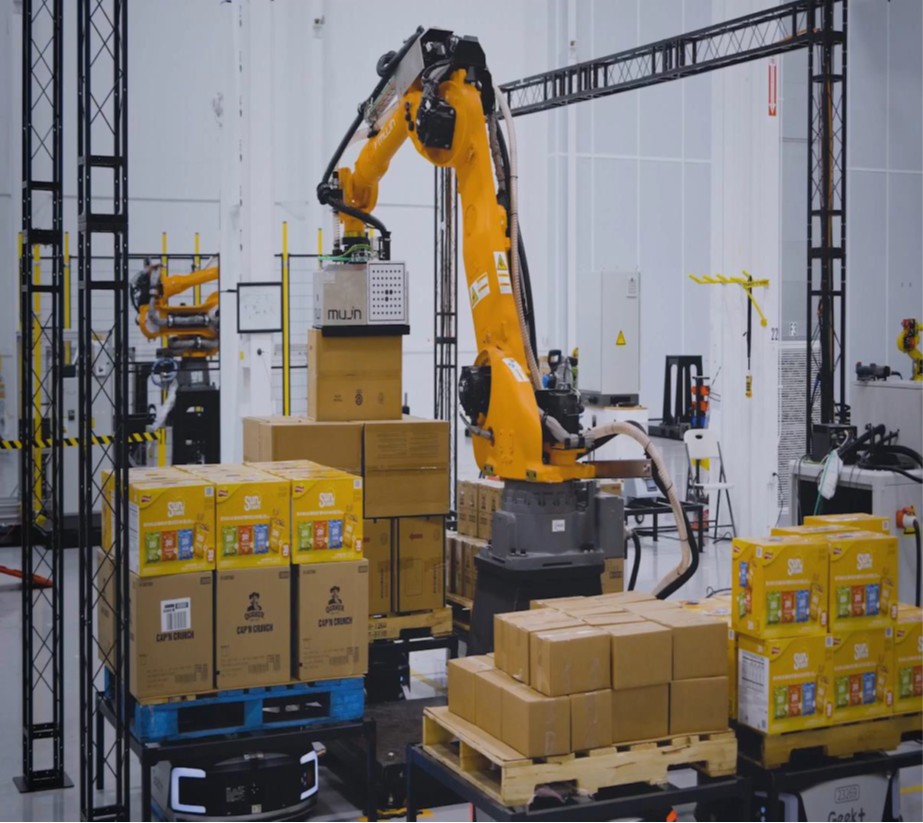
Warehouse Controls
A warehouse control system (WCS) coordinates the physical equipment in a high-density facility. The WCS receives instructions from the WMS or ERP, translates them into equipment-level commands, and tracks every movement through the system. Well-designed control architecture handles storage assignment, batching, pick sequencing, and routing as a unified function. Throughput decisions happen at the system level rather than depending on individual workers to prioritize tasks correctly.
Conveyor Coordination
Automated conveyor systems keep product movement consistent between storage zones, pick stations, pack lines, and shipping docks. When a pick station runs faster than the pack station downstream, conveyor logic buffers product in transit rather than forcing the pick station to stop. Getting this right is what separates a working automated storage facility from one that has automation components but still accumulates bottlenecks between them.
Robotic Buffering for Dense Storage Environments
High-density storage creates a specific coordination challenge: when multiple systems feed into shared downstream processes, pace differences between them generate accumulation points that slow fulfillment. Robotic buffering addresses this directly.
Dynamic Inventory Buffering
Robotic buffering systems hold inventory in a controlled intermediate stage between upstream storage and downstream processing. In a dense storage environment, this allows AS/RS or shuttle systems to run at their optimal retrieval rate while pack lines and shipping operations absorb product at their own pace. Research on multi-tote AMRs shows these robots can function as moving buffers, holding totes in transit while the system optimizes routing and delivery sequencing. Shuttle-on-shuttle storage concepts take this further, using the shuttles themselves as the buffer layer to reach up to 88% storage density with effective in/out sequencing built in.
Sequencing and Release Timing
In most fulfillment operations, orders need to arrive at the pack station in a specific sequence for efficient carton assembly and shipping sortation. A robotic buffering system handles release timing so product arrives in the right order at the right moment. The sequencing logic runs through the WCS and adjusts in real time based on order status, carrier cutoffs, and downstream capacity.
Throughput Coordination
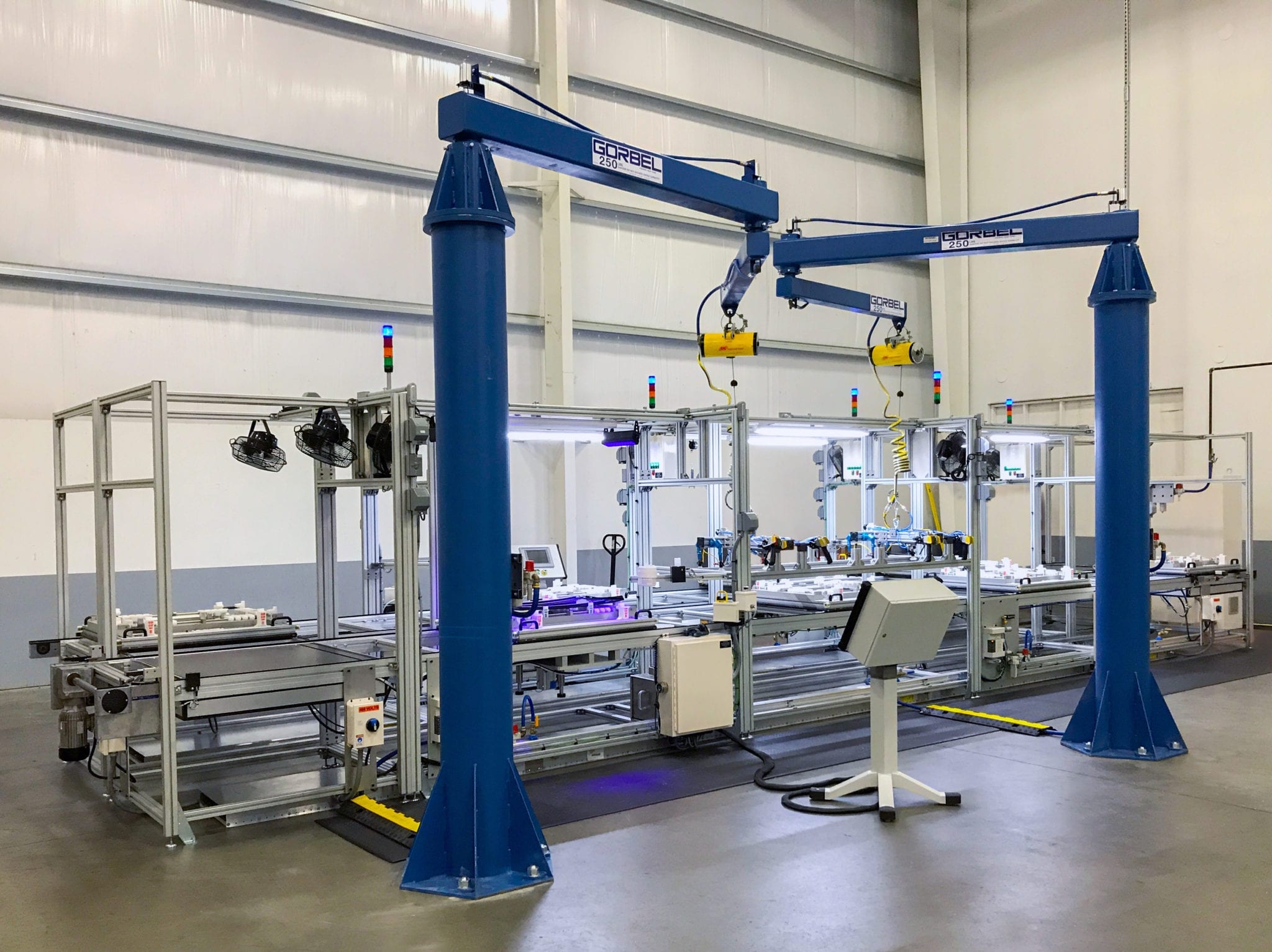 The throughput ceiling in a dense storage facility is usually set by the slowest coordinated handoff in the system. Robotic buffering decouples each stage so that one slow cycle doesn’t cascade into a line-wide slowdown. The storage system retrieves at its optimal rate, buffers absorb temporary pace differences, and downstream processing runs continuously. This matters most during peak periods when every delay compounds.
Improving Throughput Without Expanding Footprint
High-density storage is specifically designed to grow throughput capacity within a fixed building envelope. The strategies work at the vertical level, the workflow level, and through intelligent inventory slotting.
Vertical Storage Optimization
AS/RS and high-bay designs exploit vertical space with multilayer rack structures that go well beyond what conventional forklifts can reach. Automated cranes retrieve product as fast from the top tier as from the bottom. Automated pallet handling systems move full pallet loads between storage tiers and floor-level processing without manual lift equipment, removing a bottleneck in high-volume inbound and outbound flows. Vertical lift modules take a similar approach at a smaller scale, stacking trays to the ceiling and delivering them to a waist-height access window.
Workflow Efficiency
Storage assignment strategy affects throughput as much as hardware selection. Placing fast-moving SKUs in single-deep, readily accessible positions while assigning multi-deep storage to slower movers delivers meaningful density gains with minimal impact on cycle times. Research on hybrid RMFS layouts shows velocity-based slotting produces an 11.8% higher effective density with only a 5% increase in average picking time. Omnichannel operations can recover floor space by combining block stacking with rack storage for different product categories, particularly when ceiling heights allow it.
High-Density Storage Challenges
High-density systems deliver real operational advantages, but they are more complex to design, integrate, and maintain than conventional racking. Understanding the challenges is part of making a sound architecture decision.
System Complexity
Shuttle-based systems and RMFS layouts involve multiple interacting components: shuttles, lifts, conveyors, robots, WCS software, and the WMS interface above it. Failure at any point can interrupt throughput across the whole system. That is a different risk profile than a conventional shelving failure, which typically affects one zone. Integrated design and control from the start, rather than adding automation piece by piece without a system-level plan, is what makes complex high-density facilities reliable.
Integration Requirements
High-density storage equipment needs to exchange data with the WMS, ERP, and downstream processing systems in real time. That integration work is non-trivial, particularly when retrofitting into an existing facility with legacy software. Configuration choices (rack heights, shuttle counts, storage policies, lift design) need to account for the operation’s specific throughput and wait-time targets. Getting this right before installation avoids expensive rework.
Maintenance Considerations
Automated storage systems have mechanical components that wear and require scheduled maintenance: shuttle batteries, crane drives, conveyor belts, sensors, and rail systems. Downtime in a high-density facility affects a much larger portion of inventory access than downtime in a conventional one, since retrieval equipment is shared across the whole storage volume. Maintenance planning (scheduled windows, spare parts inventory, remote diagnostics) needs to be built into the facility operating model from the start. Treating it as an afterthought after the first equipment failure is expensive.
Choosing The Right Storage Architecture
No single storage architecture fits every facility. The right choice depends on what the operation actually needs to achieve.
Throughput Needs
High-throughput operations with consistent order profiles are strong candidates for AS/RS or shuttle-based systems, which handle thousands of pallet movements per hour with high reliability. Operations with very high SKU counts and variable order profiles tend to benefit more from AMR-based RMFS systems, which adapt more readily to demand shifts without reconfiguration. A useful starting point is identifying the peak throughput requirement and the SKU velocity distribution, then matching the system to both.
Facility Constraints
Ceiling height, floor load capacity, column spacing, and existing utility runs all constrain which system types are feasible in a given building. High-bay AS/RS needs significant clear height and a floor capable of supporting crane and rack loads. Shuttle systems need consistent rack bay dimensions and lift locations. AMR systems need clear floor paths and defined pick station locations. Matching the system type to what the building can actually support is the prerequisite step before evaluating specific vendors or configurations.
Scalability Planning
The most practical high-density storage investments are ones that can grow with the operation rather than requiring a complete replacement when throughput needs increase. Modular designs, where additional shuttles, AMRs, or rack bays can be added without stopping the system, allow capacity to scale in step with business growth. Starting with a WCS that can handle a larger equipment count than the initial installation also keeps future expansion from requiring a controls overhaul. Getting scalability into the design at the start is significantly cheaper than retrofitting it later. When density, retrieval speed, and building constraints pull in different directions, compare goods-to-person and robotic buffering systems and review the broader warehouse automation guide.
Frequently Asked Questions
Selecting and implementing the right high-density storage solution requires system-level thinking. Hardware selection is only part of the decision. MESH Automation designs and integrates high-density storage systems with the controls, conveyors, and robotic handling equipment to make them work as a coordinated facility. Contact MESH to discuss what architecture fits your throughput requirements and building constraints.