Two robotic approaches dominate modern picking automation, and they solve the problem in genuinely different ways.
Goods to person systems bring inventory to a fixed picker using mobile robots and stored shelves. Robotic buffering systems pack inventory into dense, often vertical grids and use dedicated robots to dig out and stage bins for retrieval. Both reduce manual walking, but they trade off throughput, density, and complexity differently. This article breaks down how each one works and which warehouse profile benefits from each approach.
What Are Goods-To-Person Systems?
Goods-to-person (GTP) systems, often implemented as robotic mobile fulfillment systems (RMFS), use autonomous mobile robots to bring storage pods, shelves, or totes directly to a stationary worker rather than sending the worker into the racks.
How GTP Systems Work
A robot drives underneath or alongside a storage pod, lifts or tows it, and carries it to a fixed pick station where a worker retrieves the needed item. Once the pick is complete, the robot returns the pod to an open storage slot, which can be anywhere in the grid since pods aren’t tied to fixed locations. This eliminates picker walking time almost entirely, replacing it with robot travel time that scales with fleet size rather than worker count. Pods carrying frequently ordered SKUs can be continuously repositioned closer to active pick stations as demand shifts.
Common GTP Technologies
The most recognizable GTP implementation is the Kiva/Amazon-style RMFS, where fleets of autonomous mobile robots navigate a shared floor grid to move pods. Other GTP technologies include shuttle-based systems operating within fixed rack lanes, AVS/RS (autonomous vehicle storage and retrieval systems), and AMR-based goods-to-person setups integrated with existing rack infrastructure. The differences between AMR vs AGV navigation approaches affect how flexibly a GTP system can adapt to a changing facility layout.
What Are Robotic Buffering Systems?
Robotic buffering systems, sometimes called compact or cube storage systems, stack bins in dense vertical grids or beneath fixed racks and use dedicated robots to retrieve specific bins by digging through the stack rather than moving an entire shelf unit.
Buffering Workflows
In a typical buffering system, robots travel on rails above a grid of stacked bins, lower a gripping mechanism into the stack, and lift out the target bin along with bins stacked above it. The system temporarily holds the displaced bins while the target bin is delivered to a port for picking, then returns everything once the transaction completes. This reshuffling logic is the defining mechanical difference from GTP systems, which never disturb inventory above or around the target item.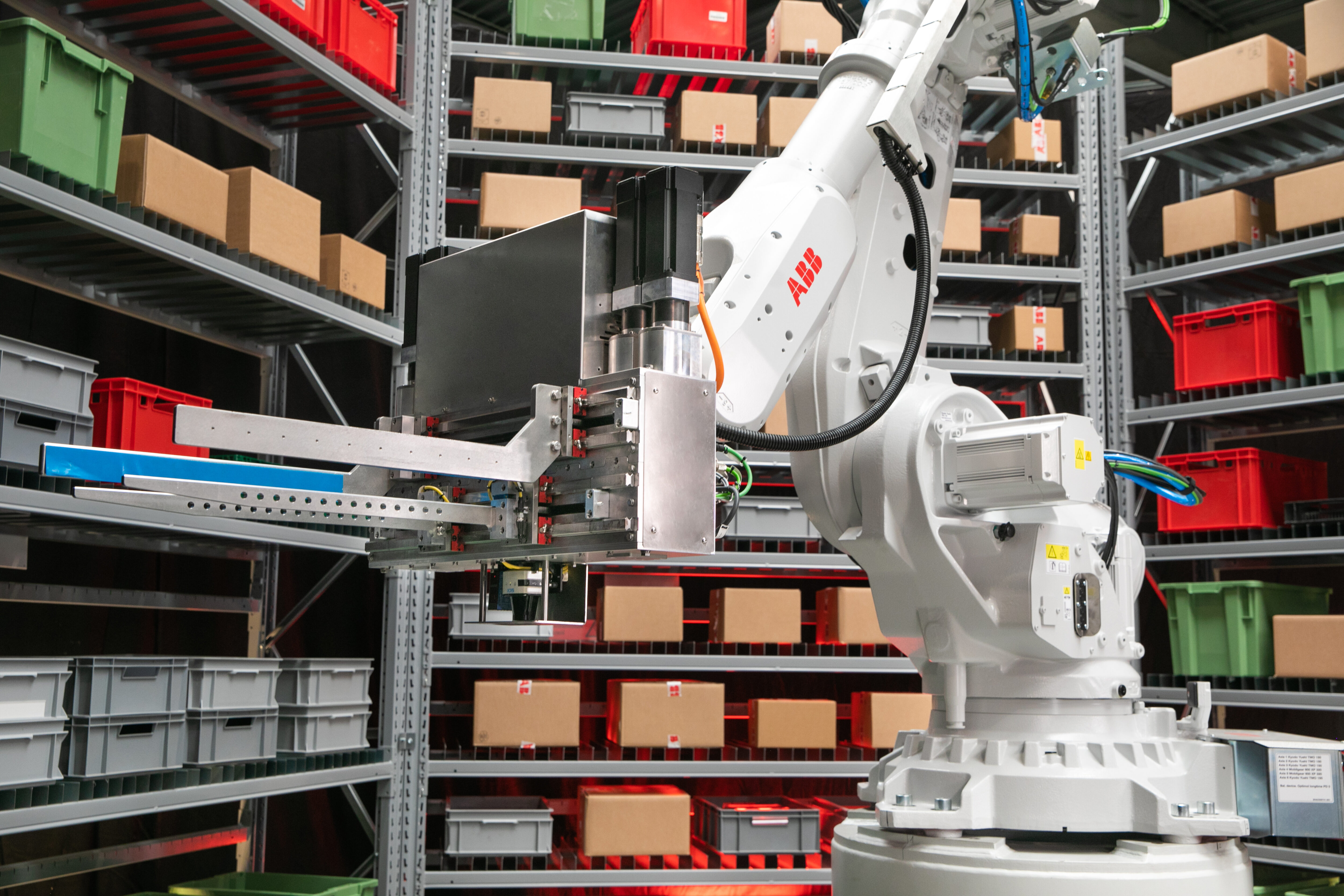
Inventory Sequencing
Because retrieval in a stacked grid can require digging past multiple bins to reach one near the bottom, buffering systems rely on explicit sequencing logic to manage stack depth and reshuffling in a way that keeps queue times acceptable. Poor sequencing can cause retrieval queues to back up during peak demand, a different coordination problem than the path planning used in GTP fleets.
Dynamic Storage Logic
Robotic buffering systems use storage policies, increasingly informed by reinforcement learning, to decide where new inventory gets placed in the stack and how often bins should be reorganized to keep frequently accessed items near the surface. A poorly organized stack means more digging, more reshuffling, and slower retrieval. Robotic buffering systems designed for high-density storage apply this same principle to manage timing between upstream retrieval and downstream processing.
Key Differences Between The Two Approaches
The core distinction between GTP and robotic buffering comes down to how inventory physically moves and how the system coordinates that movement at scale.
Workflow Structure
GTP systems move whole pods or totes across an open floor grid with congestion management between robots. Robotic buffering systems generally operate in a fixed vertical or under-rack structure, often using two robot types in relay: one to dig through the stack, another to transport bins to ports. The GTP workflow is lateral and flexible. The buffering workflow is vertical and structured.
Inventory Movement
In GTP, a pod can be stored in essentially any open slot in the grid, and robots navigate waypoints with traffic control to avoid collisions. In robotic buffering, movement happens within fixed stack columns, where accessing one bin sometimes requires temporarily relocating others above it. GTP needs floor space for robot travel paths, while buffering concentrates movement vertically and requires less floor-level traffic management.
Throughput Coordination
GTP throughput is modeled through queueing systems that account for robot count, pod count, and station assignment rules, with performance depending heavily on how well those decision rules are tuned. Robotic buffering systems use nested or semi-closed queueing models that coordinate multiple robot types and reshuffling activity simultaneously, since a queue explosion in the digging process can stall the whole system. Both approaches require careful operational modeling, but the buffering system’s coordination problem is generally more layered.
Storage Density Comparisons
Storage density is where the two approaches diverge most clearly, and it’s often the deciding factor in which system fits a given facility.
Vertical Storage
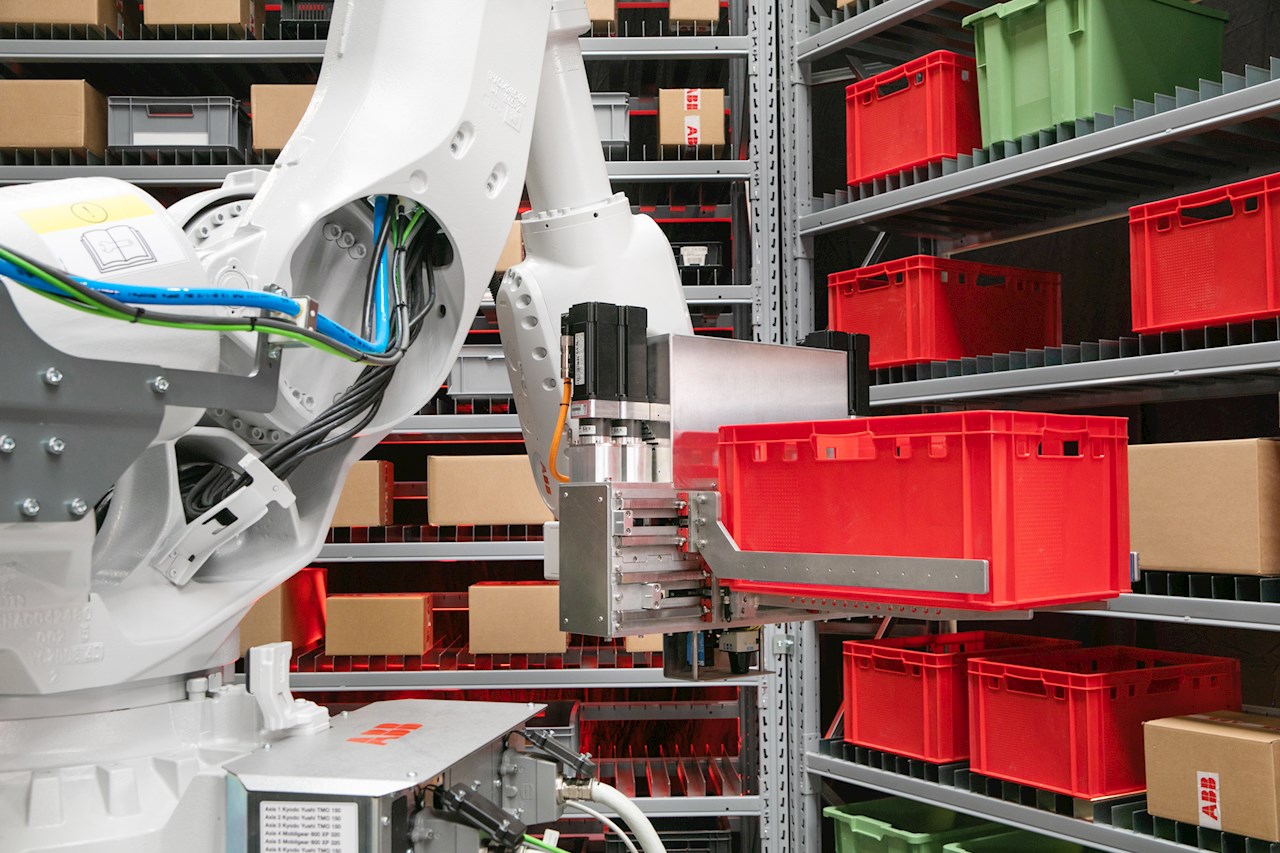 Traditional Kiva-style RMFS has comparatively poor vertical cube utilization, since pods sit on the floor and robots access them from below or the side rather than stacking densely overhead. Robotic buffering and compact systems are built specifically to exploit vertical space, with bins stacked many levels deep. Compact stacking and overhead systems can reach significantly higher density than Kiva-style GTP or comparable miniload systems, in some configurations more than tripling effective storage capacity.
Dynamic Storage Allocation
GTP systems use dynamic pod placement and often store multiple pods carrying the same SKU to reduce travel distance and keep high-velocity items close to active stations. Robotic buffering systems instead lean on stack organization policies and reshuffling rules, since storage allocation is less about where a pod sits on an open floor and more about how deep in a stack a bin should be placed. Storage rules in buffering systems materially affect layout ratios and performance, making the software layer arguably more consequential than in a comparable GTP deployment.
Throughput Comparisons
Raw throughput numbers favor GTP in most direct comparisons, though the gap depends heavily on specific system tuning and order profile.
High-Volume Operations
GTP systems can substantially increase picking rates compared to manual operations and are particularly well suited to high-volume, fluctuating e-commerce demand where order profiles shift constantly. Decision rules around order assignment and robot pooling can cut picking throughput times significantly, though aggressive optimization for picking speed can sometimes slow replenishment cycles, a trade-off operators need to plan around. Industry throughput benchmarks for GTP-style cube and shuttle systems commonly range from 200 to over 1,000 lines per hour depending on robot count and station configuration.
Peak Fulfillment Demand
Robotic buffering and compact systems can slightly sacrifice raw throughput compared to a GTP baseline, particularly for bins stored deep in a stack that require more digging to retrieve. In exchange, they deliver large floor-space savings and density gains that matter most when a facility is constrained on square footage rather than pick speed. Both system types perform well during demand surges, but GTP’s flexibility in robot pooling tends to give it an edge during the highest-volume peak windows.
Scalability Differences
Both system types scale reasonably well, but the mechanism and the ceiling differ.
Expansion Flexibility
GTP layouts, workstations, and robot fleets can typically be adjusted relatively quickly as volume grows, since adding robots to an open floor grid is a comparatively simple expansion. Robotic buffering systems also scale, often through modular grid expansion that adds bins, robots, or ports without disrupting live operations, but vertical expansion is constrained by ceiling height and structural load limits in a way floor-based GTP expansion isn’t.
System Complexity
GTP requires sophisticated routing, traffic control, and multi-stage queueing logic, but the underlying physical layout (a pod grid) is relatively simple. Robotic buffering systems add complexity through multiple robot types, overhead tracks, and reshuffling policies, though this often pays off through deeper integration with high-density layouts and mixed manual/robotic picking environments.
Best Use Cases For Each System
Neither system is universally better. Each fits a different operational profile.
E-Commerce Fulfillment
GTP/RMFS is repeatedly identified as well suited for e-commerce fulfillment with large SKU counts and volatile demand, where labor savings and high pick rates matter most. Operations shipping thousands of small, variable orders daily tend to benefit from GTP’s flexibility in pod placement and robot pooling.
Manufacturing Support
Robotic buffering and compact systems fit well in manufacturing-adjacent environments needing high storage capacity with good space efficiency, where floor space is expensive but picking velocity doesn’t need to match peak e-commerce demand. Facilities feeding components to an assembly line at a steady, predictable rate are often better matched to a buffering system’s density advantage than to a GTP system optimized for speed under variable demand.
Mixed Workflow Facilities
Some operations run both approaches in the same building, using GTP for high-velocity SKUs near shipping and a buffering system for slower-moving or bulk inventory that benefits more from density than speed. This hybrid structure lets a facility match each storage zone to its actual requirements rather than forcing one system to handle every inventory profile.
Choosing The Right Warehouse Automation Strategy
The right choice between GTP and robotic buffering depends on matching the system to actual operational requirements rather than defaulting to whichever technology is more commonly discussed.
Operational Requirements
Start with order profile and required throughput. High-volume, high-variability e-commerce fulfillment generally favors GTP’s flexibility and pick-rate advantage. Operations where space is the binding constraint tend to favor robotic buffering’s density advantage. Defining the actual throughput target before evaluating either system avoids over-engineering for speed that isn’t needed or under-engineering for density that is.
Facility Constraints
Ceiling height, floor load capacity, and existing building layout matter differently for each system. GTP needs open floor area for robot travel paths and reasonably level flooring. Robotic buffering systems need vertical clearance and structural support, but can often work around columns and irregular layouts more easily than a fixed conventional rack system. Facilities with low ceilings or limited floor space sometimes fit better with buffering systems, since complexity is concentrated vertically rather than horizontally.
Integration Considerations
Both systems need to integrate with a WMS and, in most deployments, a warehouse control system that coordinates robot fleets with conveyors, pick-to-light systems, and downstream packing. GTP’s simpler physical layout generally means more straightforward controls integration, while robotic buffering’s added robot types and reshuffling logic require more sophisticated control software. Either system benefits from robotic buffering logic at the downstream handoff, since coordinating release timing between storage and packing is a shared challenge regardless of which storage technology sits upstream. For more context on the surrounding design decisions, review our guides to high-density storage solutions and e-commerce warehouse automation.
Frequently Asked Questions
Choosing between goods-to-person and robotic buffering depends on your order profile, building constraints, and where speed matters more than density in your operation. MESH Automation works with facilities to evaluate which approach, or combination of approaches, fits their actual fulfillment requirements. Contact MESH to talk through what makes sense for your warehouse.